Home Products Air Purifier Test Cabin CADR > Air Purifier Test Cabin CADR
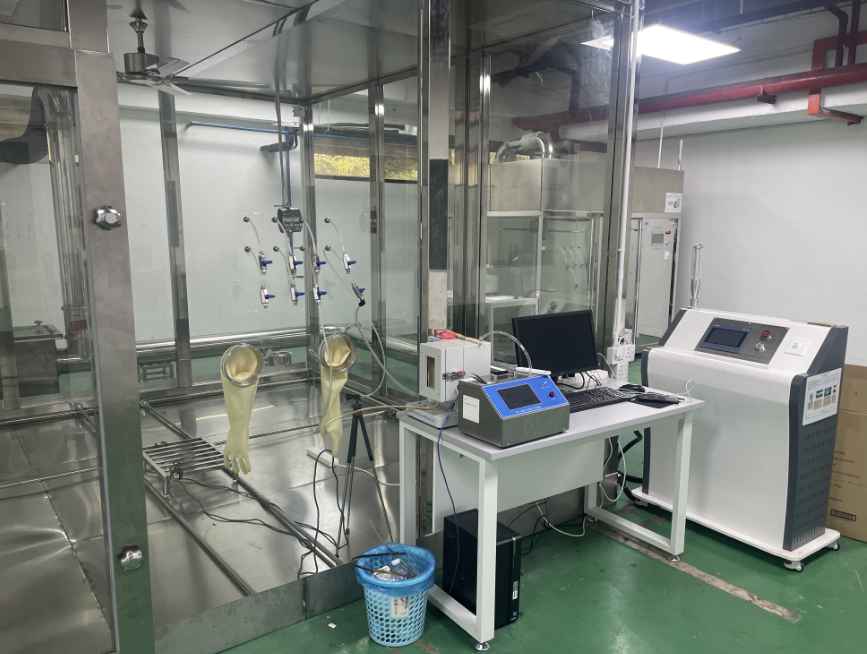


The air purifier test chamber is a specialized laboratory equipment that simulates indoor environments and quantitatively tests the performance indicators of air purifiers. Its core function is to eliminate external interference and provide accurate and reproducible testing environments for key parameters such as purification efficiency, clean air volume (CADR), and cumulative purification volume (CCM) of air purifiers.
+8675526585726
guosen.lu@damslab.com
DESCRIPTION
1、 Product performance testing
Measure the purification efficiency of air purifiers for target pollutants such as particulate matter (PM2.5, PM10), gaseous pollutants (formaldehyde, toluene, TVOC), and microorganisms (bacteria, viruses).
Calculating Clean Air Volume (CADR): Measuring the ability of a purifier to output clean air per unit time, it is a core performance indicator.
Evaluate Cumulative Purification Capacity (CCM): measures the service life of the purifier filter, which is the total mass of pollutants that can be purified before the filter reaches saturation.
Test auxiliary performance parameters such as noise, energy consumption, and air volume.
2、 The design and testing process of the air purifier test chamber shall comply with the following standards:
GB/T 18801-2015 "Air Purifiers" specifies the technical requirements and test methods for air purifiers, and is the core basis for the design and testing of domestic test chambers
JJG 998-2005 "Calibration Specification for Air Purifiers" is a specialized specification for air purifier calibration, which guides the calibration process of the testing chamber
ISO 16890:2016 "Air Filters - Part 1-4" covers the classification and performance testing methods of air filters, and is applicable to the performance testing of purifier filters
IEC 60312:2017 "Household and Similar Air Purifiers" is a standard developed by the International Electrotechnical Commission to regulate the safety and performance testing of household air purifiers
EN 1822:2019 "High Efficiency Air Filters" is a testing standard for High Efficiency Particulate Air (HEPA) filters, suitable for testing purifiers equipped with HEPA filters
3、 Key technical requirements
The technical parameters of the air purifier test chamber directly determine the detection accuracy and must meet the following core requirements:
A. Cabin structure and sealing: Cabin material: Materials that do not adsorb or release pollutants, such as 304 stainless steel, polytetrafluoroethylene (PTFE), etc., should be selected to avoid interference from the cabin itself on the test results. Sealing: The pressure inside the cabin is slightly higher than the outside (to prevent the infiltration of external pollutants), and the leakage rate should be ≤ 0.05%/h to ensure the stable and controllable concentration of pollutants inside the cabin. Cabin volume: The commonly used specifications are 1m ³ (for small-scale experiments), 30m ³ (for simulating ordinary rooms), and 100m ³ (for simulating large spaces), which need to be selected according to the testing requirements, and the volume error inside the cabin should be ≤ ± 2%.
B.Environmental control system ◦ Temperature control: The range is usually (23 ± 2) ℃, with an accuracy of ± 0.5 ℃, meeting the standard specified testing environment temperature. Humidity control: The range is usually (50 ± 5)% RH, with an accuracy of ± 2% RH, to avoid humidity affecting the volatilization of gaseous pollutants such as formaldehyde and the deposition of particulate matter. ◦ Airflow uniformity: A mixing fan should be installed inside the cabin to ensure even distribution of pollutants, with an airflow velocity of ≤ 0.3m/s, to prevent excessive airflow from affecting the performance of the purifier.
C.Pollutant Generation and Monitoring System ◦ Pollutant Generation Device: It can accurately generate particulate matter (such as dioctyl phthalate DOP aerosol) and gaseous pollutants (such as formaldehyde standard gas), with controllable and stable concentrations. Monitoring equipment: High precision particle counters (such as laser particle counters), gas chromatographs (for detecting formaldehyde/TVOC), microbial samplers, etc. are required, and the monitoring accuracy must meet standard requirements (such as particle detection accuracy of up to 0.3 μ m). Data collection: supports real-time collection of pollutant concentration, temperature and humidity, pressure and other data in the cabin, with a data recording frequency of ≥ 1 time/minute, and the data can be exported for analysis.
D.Safety and Control System ◦ Equipped with Ventilation System: After the test is completed, pollutants in the cabin can be quickly discharged to ensure the safety of operators. Emergency protection: set up over temperature and over pressure alarm devices, and interlock protection for cabin doors (automatic shutdown when the cabin door is opened during the test). Control system: supports manual/automatic mode switching, and can preset test procedures (such as timing control of pollutant occurrence, purifier operation, and data acquisition).
INQUIRY
+8675526585726
guosen.lu@damslab.com

 English